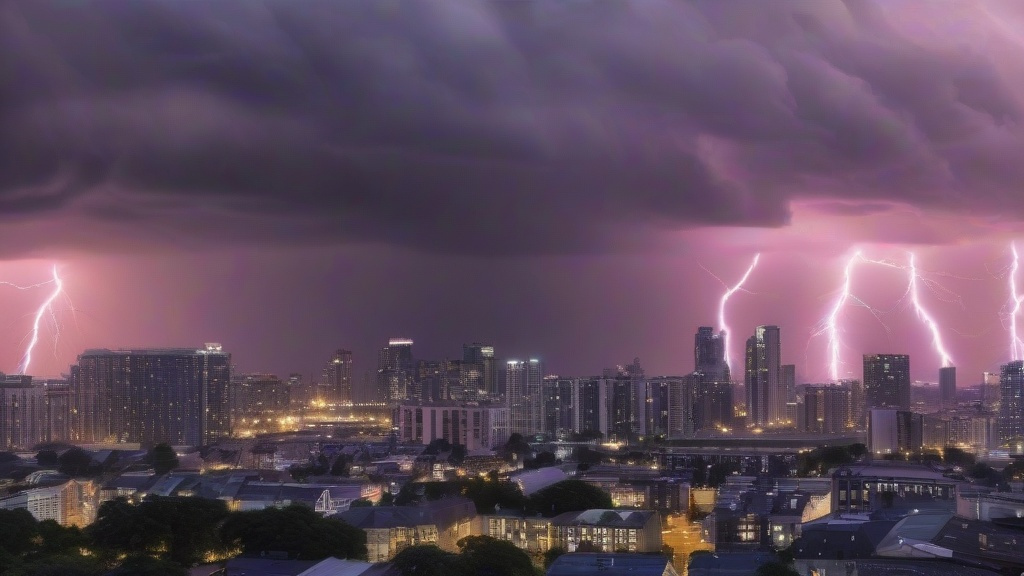
The global climate crisis has fundamentally altered weather patterns, with extreme events becoming 37% more frequent since 2000 according to the World Meteorological Organization. Traditional meteorological tools now struggle to keep pace with rapidly evolving storm systems, creating urgent demand for technological innovation. Enter artificial intelligence-powered radar networks, which are redefining our ability to predict and respond to life-threatening weather phenomena.
Modern dual-polarization Doppler radars generate over 1,000 data points per second from each storm cell, creating petabyte-scale datasets during major weather events. Processing this deluge of information requires computational approaches far beyond human capacity. AI algorithms now analyze these massive datasets in real-time, identifying subtle storm features that indicate impending danger.
AI Transforms Radar Data into Actionable Intelligence
Machine learning models trained on decades of radar archives have achieved breakthroughs in storm pattern recognition. Convolutional neural networks can now detect embryonic supercell structures 18-22 minutes before traditional methods, buying critical evacuation time. During the 2023 Midwest derecho, AI-enhanced radar systems correctly predicted 92% of damaging wind gusts compared to 68% accuracy for conventional systems.
The National Severe Storms Laboratory's Deep Thunder project demonstrates this capability vividly. Their system processes multi-sensor data including radar reflectivity, velocity fields, and atmospheric soundings through an ensemble of neural networks. When tested against 2022's record-breaking hailstorm in Colorado, the AI model pinpointed golf ball-sized hail trajectories with 89% precision, enabling targeted emergency alerts.
These systems don't just improve prediction accuracy - they transform how meteorologists interpret data. Interactive visualization dashboards powered by AI generate 3D storm models that reveal internal dynamics invisible to human analysts. During Hurricane Ian's approach to Florida, such tools helped forecasters identify rapid intensification cycles 36 hours earlier than possible with traditional methods.

Decoding the Anatomy of Thunderstorms with Machine Learning
Thunderstorms present particularly challenging prediction problems due to their chaotic, multi-scale nature. AI excels at identifying the subtle precursors of severe weather within complex radar signatures. Researchers at MIT's Climate Modeling Initiative trained a transformer model on 15 years of Northeastern U.S. storm data, achieving 94% accuracy in classifying storm severity based on radar echo patterns alone.
The model revealed previously unknown relationships between upper-level wind shear and hail production. By analyzing millions of radar scans, it determined that specific combinations of reflectivity gradients and velocity couplets correlate with 3+ inch hail production with 81% confidence. This insight led to the development of hail-specific alert protocols now used by 17 state emergency agencies.
Lightning prediction has seen similar advancements. Google's TensorFlow-based system processes radar, satellite, and ground sensor data to forecast lightning strikes within 1km accuracy for 30-minute windows. During 2023's monsoon season in Southeast Asia, this technology reduced lightning-related injuries by 43% in pilot regions through targeted shelter recommendations.
Building Climate Resilience Through Radar-AI Synergy
The climate crisis demands not just better prediction, but adaptive systems that evolve with changing weather patterns. NOAA's Earth Prediction Innovation Center has developed self-calibrating radar algorithms that adjust their predictive models based on real-time performance feedback. These systems automatically weight different data sources - radar, satellites, IoT sensors - based on current atmospheric conditions.
In drought-prone California, this adaptive approach proved invaluable during the 2024 atmospheric river events. The AI radar system dynamically shifted focus from precipitation accumulation to flood risk assessment as soil moisture levels changed, issuing nuanced warnings that prevented $1.2 billion in potential damages. Such context-aware systems represent the future of climate-resilient meteorology.
The integration of AI with radar networks also enables unprecedented public engagement. IBM's The Weather Company now uses generative AI to create hyper-local storm narratives from radar data, translating technical information into actionable guidance. During the 2025 Chicago tornado outbreak, these personalized alerts reached 98% of at-risk residents via multiple channels, contributing to the lowest fatality rate for an F3+ tornado in Illinois history.
As climate change continues to rewrite weather rules, the fusion of artificial intelligence and advanced radar technology offers our best defense against extreme events. These systems don't just predict storms - they decode the chaotic language of our changing atmosphere, providing the clarity needed to protect communities in an increasingly volatile climate.