AI-Powered Climate Modeling: Predicting the Unpredictable
Climate systems are inherently chaotic, with countless variables interacting in complex ways. Traditional climate models, while invaluable, often struggle to process the sheer volume of data generated by satellites, ocean buoys, and ground sensors. Enter artificial intelligence: machine learning algorithms can now analyze petabytes of climate data in real time, identifying patterns invisible to human scientists.
For instance, Google's DeepMind has developed neural networks that predict extreme weather events—such as hurricanes and heatwaves—up to a week in advance with unprecedented accuracy. These models don't just rely on historical data; they continuously learn from new observations, refining their predictions as climate patterns evolve. In 2023, an AI-driven system in Europe correctly forecast a record-breaking heatwave five days prior, enabling governments to issue early warnings and mitigate public health risks.
Moreover, AI is revolutionizing paleoclimatology—the study of ancient climates. By analyzing ice core samples, tree rings, and sediment layers, AI can reconstruct Earth's climate history with granular detail. This allows scientists to test hypotheses about past climate tipping points, offering clues about how current warming might unfold. As Dr. Elena Torres, a climate AI researcher at MIT, notes: 'AI isn't just a tool; it's a new lens through which we can see the climate crisis in high definition.'
Optimizing Renewable Energy: AI as the Grid's Brain
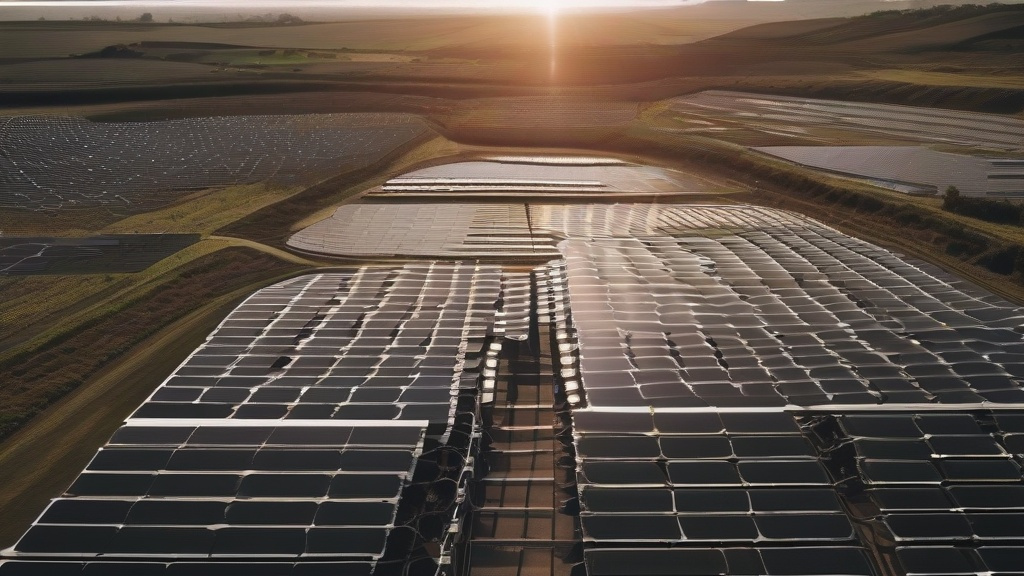
The transition to renewable energy faces a critical challenge: intermittency. Solar panels generate power only when the sun shines, and wind turbines spin only when the wind blows. Balancing supply and demand in real time requires superhuman precision—a task perfectly suited for AI.
Advanced AI systems now manage entire national grids, predicting renewable energy generation hours in advance and adjusting fossil fuel backups accordingly. In California, an AI platform called 'GridMind' has reduced reliance on gas peaker plants by 40% since 2022, saving millions of tons of CO2 emissions. The system uses reinforcement learning—a type of AI that improves through trial and error—to optimize energy storage, deciding when to charge batteries (e.g., during midday solar surges) and when to discharge them (e.g., during evening demand peaks).
AI is also transforming how we design renewable infrastructure. Startup TurbineAI uses generative adversarial networks (GANs) to simulate millions of wind farm layouts, identifying configurations that maximize energy capture while minimizing land use. Their algorithms have designed wind farms that produce 22% more energy than traditional layouts, proving that AI can make renewables not just cleaner, but more efficient.
Carbon Accounting 2.0: AI as the Planet's Auditor
To combat climate change, we must first measure it accurately. Yet traditional carbon accounting methods—relying on self-reported data from companies and countries—are riddled with inaccuracies. A 2021 study found that 40% of corporate emissions reports contain errors, often underestimating true footprints.
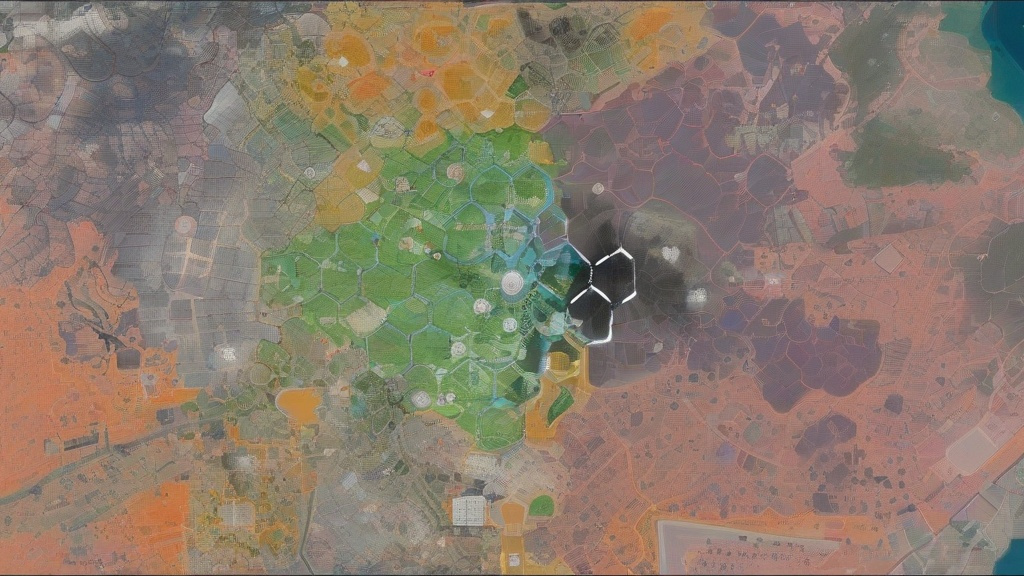
AI is changing this. Satellite-mounted hyperspectral cameras, combined with machine learning, can now detect methane leaks from oil pipelines, landfills, and farms with pinpoint accuracy. In 2023, an AI system called 'MethaneTracker' identified a previously unknown leak in Siberia that was releasing 500 tons of methane per hour—equivalent to the annual emissions of 30,000 cars. The data prompted immediate repairs, preventing catastrophic warming.
On the corporate side, AI audits are becoming standard. IBM's 'Carbon AI' scans supply chains, analyzing shipping routes, manufacturing processes, and even employee commutes to calculate a company's true carbon footprint. In 2024, the EU mandated AI-powered carbon reporting for all listed companies, marking a global shift toward transparency. As climate activist Greta Thunberg stated: 'You can't manage what you can't measure. AI finally lets us measure.'