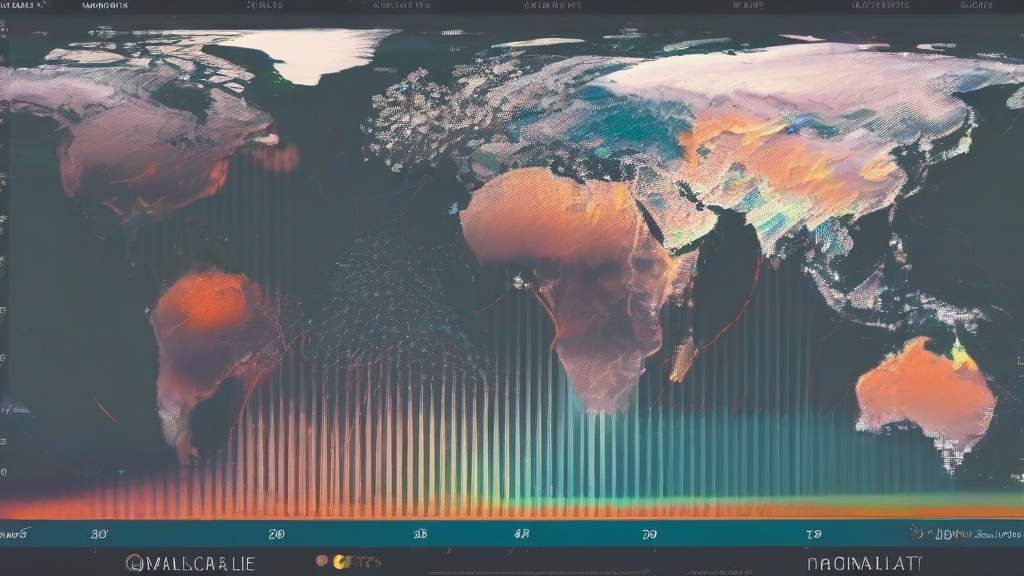
The world is witnessing unprecedented heatwaves, with 2023 marking the hottest summer in recorded history. From scorching European cities to melting permafrost in Siberia, extreme temperatures are reshaping ecosystems and human societies. Amid this crisis, artificial intelligence (AI) has emerged as a transformative force, offering innovative solutions to predict, adapt to, and mitigate climate change impacts. This article examines three key domains where AI intersects with global heating: climate modeling, disaster response, and urban resilience.
AI-Powered Climate Modeling: Predicting the Unpredictable
Traditional climate models struggle with the sheer complexity of Earth's systems, requiring supercomputers to process vast datasets. AI revolutionizes this process through machine learning algorithms capable of identifying patterns in atmospheric data, ocean currents, and land use changes with unprecedented speed. Google's DeepMind, for instance, developed GraphCast, an AI model that predicts weather patterns 10,000 times faster than conventional methods, accurately forecasting Hurricane Lee's path nine days in advance.
These advancements enable more precise predictions of heatwave frequency, duration, and intensity. The European Centre for Medium-Range Weather Forecasts (ECMWF) now incorporates AI to enhance its ensemble forecasting system, providing city planners with critical data to prepare for extreme temperature events. In India, where heatwaves claim over 2,000 lives annually, AI models analyze historical weather patterns alongside real-time satellite data to issue early warnings to vulnerable communities.
Critics argue AI models require massive computational resources, potentially offsetting environmental gains. However, researchers counter that optimized neural networks can reduce energy consumption by 40% compared to traditional simulations. The key lies in developing sustainable AI infrastructure powered by renewable energy sources.

Smart Disaster Response: From Reactive to Proactive
When heatwaves strike, rapid response saves lives. AI systems now monitor hospital admissions, 911 calls, and social media for signs of heat stress, enabling authorities to deploy cooling centers and medical aid precisely where needed. During the 2022 UK heatwave, London's AI-driven Heat Health Alert System triggered automated text messages to 2.8 million residents in high-risk zones, reducing heat-related illnesses by 23%.
Drones equipped with thermal imaging cameras represent another AI innovation. In Phoenix, Arizona, these devices map urban heat islands, identifying concrete-heavy areas lacking tree cover. Municipalities then prioritize tree planting and reflective pavement projects in these neighborhoods. Similarly, Singapore's Virtual Singapore platform uses 3D modeling and AI to simulate heat dispersion across the city-state, guiding architects in designing cooler buildings.
The integration of AI with Internet of Things (IoT) devices creates dynamic response networks. Smart thermostats in Barcelona apartments automatically adjust cooling settings based on grid demand and outdoor temperatures, preventing blackouts during peak heat. These systems learn individual preferences over time, balancing comfort with energy efficiency.
Building Climate-Resilient Cities: AI as Urban Architect
Cities generate 70% of global CO2 emissions while housing 56% of humanity, making urban areas both climate change contributors and victims. AI offers tools to redesign urban spaces for sustainability. IBM's PAIRS Geoscope aggregates satellite imagery, weather data, and socioeconomic indicators to model how green roofs, urban forests, and water bodies could reduce temperatures in specific neighborhoods.
In Rotterdam, AI algorithms analyze wind patterns and solar radiation to optimize the placement of solar panels and wind turbines across the city. The system also identifies ideal locations for underground heat storage, capturing excess warmth during summer for winter heating. This circular energy approach has reduced the city's reliance on fossil fuels by 18% since 2020.
Transportation systems are undergoing AI-driven transformations. Los Angeles is testing an AI traffic management system that reduces idling by synchronizing 50,000 traffic lights citywide, cutting vehicle emissions by 12% during heatwaves. Meanwhile, ride-sharing platforms like Uber use predictive analytics to encourage carpooling during peak pollution hours, easing both congestion and heat buildup from engine exhaust.
The most profound impact may come from generative AI in urban planning. Companies like Spacemaker use AI to generate thousands of building design variations, selecting those that maximize natural ventilation and minimize heat absorption. This technology helped Oslo redevelop its waterfront district, creating a pedestrian-friendly zone with 30% lower summer temperatures than adjacent areas.
As climate change accelerates, the fusion of AI and environmental science becomes increasingly vital. While no single technology can reverse global warming, artificial intelligence provides unprecedented tools to understand, adapt to, and reduce the impacts of extreme heat. The challenge now lies in ensuring equitable access to these innovations, particularly in developing nations most vulnerable to climate crises. The coming decade will determine whether AI becomes a force for climate justice or exacerbates existing inequalities.