The global climate crisis is no longer a distant threat but an immediate reality. Rising temperatures, erratic precipitation, and record-breaking heatwaves have become annual headlines. What makes this era unique is not just the severity of climate change but the emergence of artificial intelligence (AI) as a game-changing tool in understanding, predicting, and mitigating its impacts. This article examines how AI is revolutionizing climate science by analyzing extreme weather patterns, enhancing disaster preparedness, and creating adaptive solutions for a warming world.
The Rise of Climate Extremes: A New Normal
Extreme weather events—hurricanes, wildfires, floods, and droughts—have increased in frequency and intensity over the past decade. The 2021 Pacific Northwest heat dome shattered temperature records by 10°C, while Hurricane Ian's 2022 landfall in Florida demonstrated how warmer oceans fuel stronger storms. These events aren't random anomalies but symptoms of a climate system pushed beyond its historical equilibrium.
Traditional climate models struggle to capture the nonlinear dynamics of these extremes. They rely on historical data and physical equations that may not account for rapid atmospheric changes. This is where AI enters the picture. Machine learning algorithms excel at identifying complex patterns in vast datasets, including satellite imagery, weather station measurements, and ocean buoys. By training on decades of climate data, AI systems can detect subtle precursors to extreme events that human analysts might miss.
For example, Google's GraphCast project uses neural networks to forecast weather up to 10 days in advance with unprecedented accuracy. During Hurricane Otis's rapid intensification in 2023, GraphCast provided 72 hours of warning compared to traditional models' 36 hours. Such lead times are critical for evacuation planning and resource allocation.
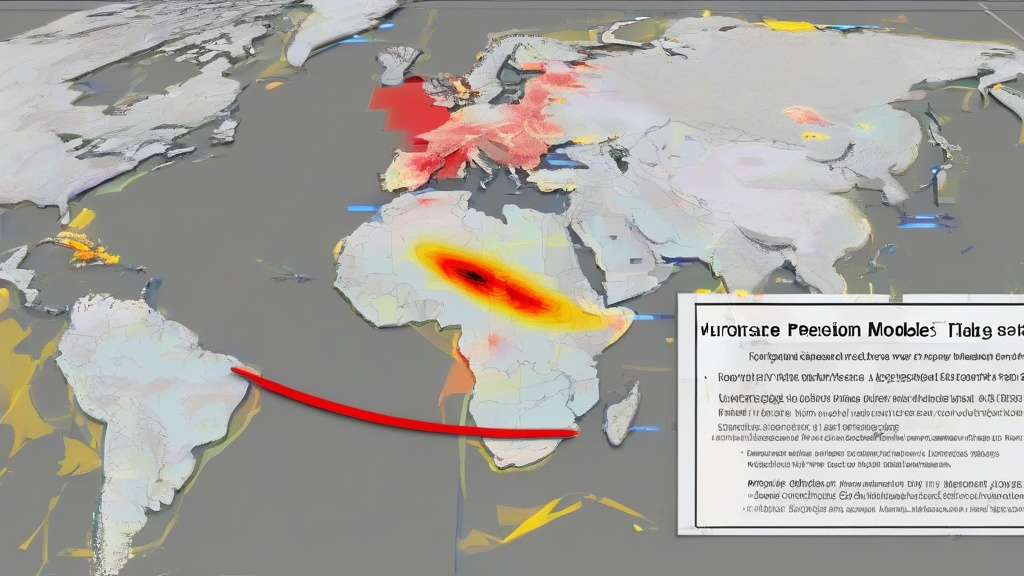
AI-Powered Disaster Prediction: From Reactive to Proactive
The true value of AI in climate science lies in its predictive capabilities. Extreme weather prediction has evolved from statistical averaging to dynamic, real-time analysis. Modern AI systems process petabytes of data daily, incorporating atmospheric pressure, humidity levels, sea surface temperatures, and even social media reports of unusual weather phenomena.
One groundbreaking application is wildfire prediction. California's ALERTWildfire system uses AI to analyze camera feeds from across the state, detecting smoke plumes within minutes of ignition. When combined with weather forecasts and vegetation dryness indices, this technology can predict fire spread paths with 90% accuracy up to six hours in advance. In 2023, this system helped contain the McKinney Fire before it could grow beyond 60,000 acres—a fraction of what it might have become without early intervention.
Flood prediction has seen similar advancements. The European Flood Awareness System (EFAS) now integrates AI models that account for urbanization patterns, soil saturation levels, and river basin topography. During the 2021 Central European floods, EFAS's AI component correctly predicted river cresting times within ±2 hours for 85% of monitored locations, enabling precise deployment of sandbags and emergency services.

Building Climate Resilience: AI as a Planning Partner
While predicting disasters is crucial, the ultimate goal is climate resilience—the ability to withstand and recover from extreme events. Here, AI serves as both an analytical tool and a decision-making partner. Cities worldwide are using AI to redesign infrastructure, optimize energy grids, and create adaptive water management systems.
Singapore's 'Virtual Singapore' project exemplifies this approach. This digital twin of the city-state simulates climate impacts at neighborhood levels, testing how different building materials, green spaces, and drainage systems affect flood risk. When combined with real-time weather data, the system can recommend temporary flood barriers or traffic diversions hours before heavy rainfall.
Energy systems are another critical area. As renewable energy sources like wind and solar become dominant, their intermittency creates grid stability challenges. AI algorithms now balance supply and demand in real-time, predicting cloud cover for solar farms or wind speed changes for turbines. During the 2022 Texas freeze, an AI-managed microgrid maintained power for a hospital complex by automatically switching between solar panels, batteries, and diesel generators based on weather forecasts.
The agricultural sector benefits from AI-driven precision farming. Companies like Climate FieldView analyze soil moisture, crop health, and weather patterns to recommend optimal planting times and irrigation schedules. In drought-prone regions, this technology has reduced water usage by 30% while maintaining yields.
Looking ahead, the most promising AI applications may involve 'climate engineering'—deliberate interventions to counteract warming. Projects like Harvard's SCoPEx, which explores solar radiation management, rely on AI models to predict atmospheric responses and minimize unintended consequences. While controversial, such research underscores AI's growing role in shaping Earth's climate systems.