The Rising Threat: Climate Change and Extreme Weather Patterns
The planet is witnessing an unprecedented surge in extreme weather events. Heatwaves scorch continents, hurricanes intensify with record-breaking wind speeds, and floods submerge entire regions within hours. Scientists attribute these phenomena to climate change—a systemic shift driven by greenhouse gas emissions altering Earth's atmospheric and oceanic systems.
Data from the Intergovernmental Panel on Climate Change (IPCC) reveals a 70% increase in the frequency of extreme weather disasters since 2000. The economic toll exceeds $200 billion annually, while human lives lost number in the tens of thousands. Traditional climate models struggle to keep pace with these rapid changes, creating an urgent need for more adaptive and predictive technologies.
Extreme weather events now exhibit complex patterns. For instance, wildfires in Australia and California have become year-round threats due to prolonged droughts and rising temperatures. Similarly, monsoon systems in South Asia have grown more erratic, disrupting agriculture and displacing millions. These changes underscore the interconnectedness of global climate systems and the necessity for innovative solutions.

AI as a Climate Sentinel: Enhancing Predictive Capabilities
Artificial intelligence has emerged as a transformative tool in climate science. Unlike conventional models relying on historical data, AI systems process vast datasets from satellites, weather stations, and ocean buoys in real time. Machine learning algorithms detect subtle patterns invisible to human analysts, enabling more accurate forecasts of extreme weather.
Google's DeepMind, for example, developed an AI model that predicts rainfall patterns 90 minutes in advance with 89% accuracy—a critical window for emergency responses. Similarly, IBM's Global High-Resolution Atmospheric Forecasting System (GRAF) leverages AI to generate hyperlocal weather predictions, helping communities prepare for sudden storms or heatwaves.
AI also improves long-term climate projections. Researchers at the University of California, Berkeley, trained neural networks on centuries of climate data to simulate future scenarios. These models now predict that without immediate emission reductions, extreme heat events could affect 3 billion people by 2070. Such insights empower policymakers to prioritize mitigation strategies.
From Prediction to Action: AI-Driven Disaster Response and Renewable Energy
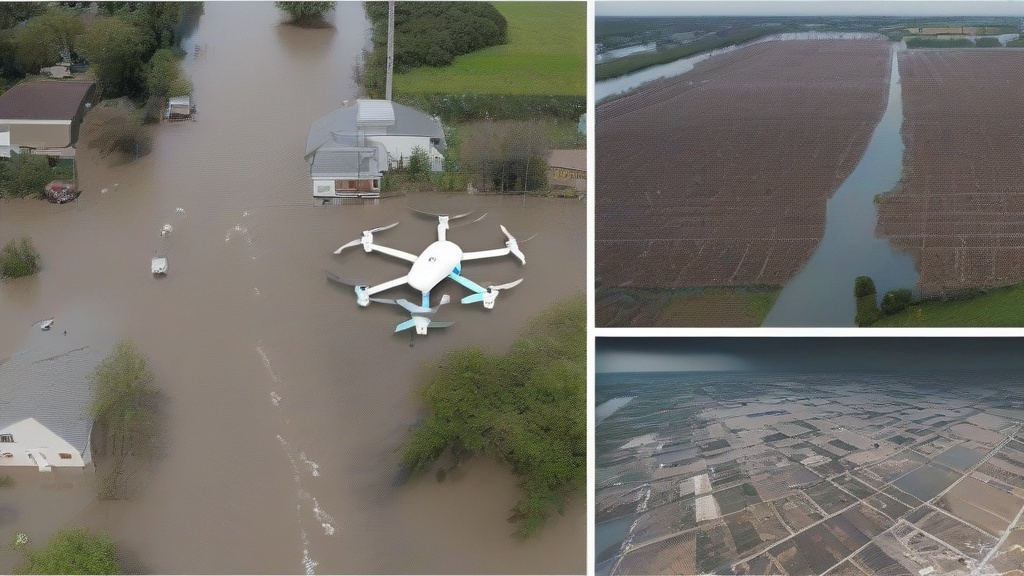
Beyond forecasting, AI optimizes disaster response and renewable energy deployment. During hurricanes, AI-powered drones assess damage in real time, guiding rescue teams to trapped survivors. In flood-prone areas, smart sensors connected to AI networks issue early warnings, enabling evacuations before waters rise.
The energy sector benefits equally. AI algorithms balance grid demand with renewable sources like wind and solar, which are inherently variable. Google's DeepMind partnered with the National Grid in the UK to reduce wind energy forecasting errors by 20%, saving millions in operational costs. Similarly, startups like Stem, Inc. use AI to store excess solar power in batteries, ensuring supply during cloudy days or peak demand.
AI also aids in reforestation efforts. Companies like Pachama employ satellite imagery and machine learning to monitor forest health, identifying areas at risk of wildfires or deforestation. By analyzing soil moisture, tree density, and carbon sequestration rates, AI helps restore ecosystems that act as natural buffers against extreme weather.
The integration of AI into climate action faces challenges. Data privacy concerns, algorithmic biases, and high computational costs remain hurdles. However, collaborations between tech giants, governments, and NGOs are driving progress. The European Union's Destination Earth initiative, for instance, aims to create a digital twin of Earth powered by AI, simulating climate scenarios to test mitigation policies.
As extreme weather becomes the norm, AI offers a beacon of hope. By enhancing predictive accuracy, streamlining disaster response, and optimizing green energy, technology provides humanity with unprecedented tools to confront climate change. The path forward demands not just innovation but also global cooperation to ensure equitable access to these life-saving solutions.