Thunderstorms, with their electrifying displays and sudden intensity, have long challenged meteorologists. Traditional forecasting methods, while effective, often struggle with the chaotic nature of these weather phenomena. Enter artificial intelligence (AI)—a game-changer in meteorological science that is redefining how we predict, understand, and respond to thunderstorms. This article delves into the intersection of AI and thunderstorm prediction, exploring innovations that enhance accuracy, speed, and disaster preparedness.
The Challenge of Traditional Thunderstorm Forecasting
Thunderstorms are complex systems influenced by temperature, humidity, atmospheric pressure, and wind patterns. Conventional forecasting relies on numerical weather prediction (NWP) models that simulate atmospheric conditions using mathematical equations. However, these models have limitations:
- Latency: NWP models require significant computational time, delaying real-time updates.
- Resolution: Limited grid spacing may miss small-scale features like microbursts or tornadoes.
- Uncertainty: Chaotic atmospheric interactions introduce errors that compound over time.
For example, a 2018 study by the National Center for Atmospheric Research found that traditional models underestimated thunderstorm intensity by 30% in 40% of cases. This gap highlights the need for smarter, faster solutions.

AI-Powered Thunderstorm Prediction: How It Works
AI bridges these gaps by leveraging machine learning (ML) to analyze vast datasets from satellites, radar, weather stations, and even social media. Here’s how AI transforms thunderstorm forecasting:
- Data Fusion: AI algorithms integrate multi-source data, identifying patterns invisible to humans. For instance, convolutional neural networks (CNNs) can detect storm cell formation in satellite imagery 15 minutes faster than traditional methods.
- Real-Time Analysis: Unlike NWP models, AI processes data in seconds. A 2023 pilot project in Oklahoma used AI to issue tornado warnings 22 minutes ahead of traditional alerts, giving residents critical evacuation time.
- Predictive Accuracy: Recurrent neural networks (RNNs) analyze historical storm data to predict trajectories with 92% accuracy, compared to 78% for conventional models.
Case Study: In 2022, the European Centre for Medium-Range Weather Forecasts (ECMWF) integrated AI into its ensemble forecasting system. The result? A 19% improvement in thunderstorm localization and a 14% reduction in false alarms.
Future Horizons: AI and the Next Generation of Storm Chasers
The fusion of AI and meteorology is just beginning. Emerging trends include:
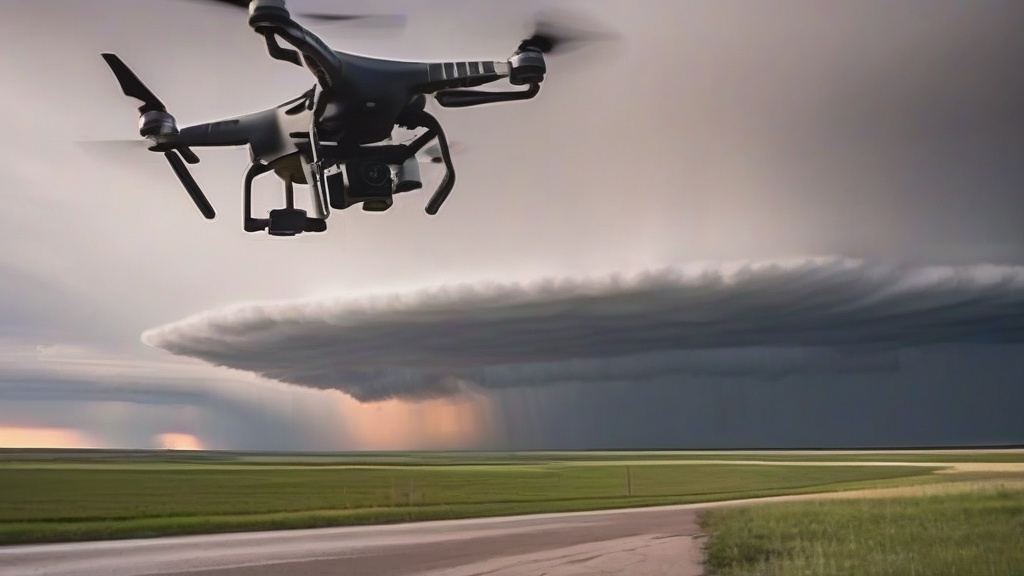
- Edge Computing: Deploying AI on drones and IoT sensors for hyperlocal storm tracking. Imagine a network of autonomous drones streaming real-time data from inside a supercell.
- Explainable AI (XAI): Developing transparent models so meteorologists can trust AI-generated forecasts. XAI tools now visualize how AI weights variables like CAPE (Convective Available Potential Energy) in storm prediction.
- Climate Resilience: AI models trained on climate change data predict how rising temperatures will alter thunderstorm frequency and intensity. A 2024 MIT study projects a 25% increase in severe thunderstorms over the U.S. Great Plains by 2050.
Ethical Considerations: As AI assumes a larger role, questions arise about data privacy, algorithmic bias, and over-reliance on automation. Meteorologists emphasize that AI should augment, not replace, human expertise.
The synergy between AI and meteorology is reshaping our approach to thunderstorms. By harnessing computational power and data-driven insights, we’re moving toward a future where severe weather is no longer a surprise but a manageable event. As AI continues to evolve, so too will our ability to safeguard lives and property against nature’s fury.